Unprecedented 24-Hour Strike Threatens Disruption at the Venice Biennale Amid Political Tensions
Introduction The Venice Biennale, one of the world’s most prestigious contemporary art exhibitions, faces a significant disruption as an
Introduction
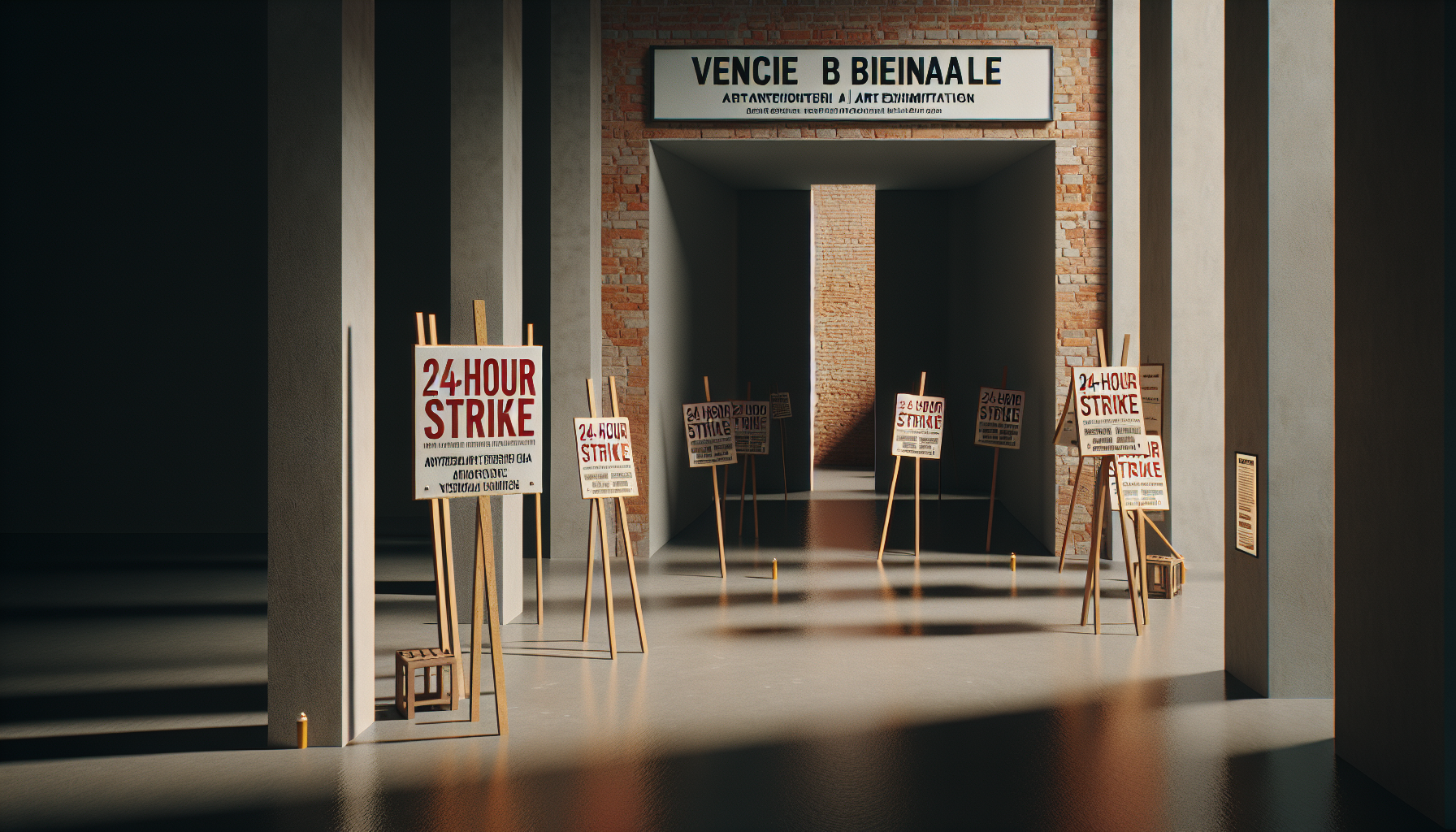
The Venice Biennale, one of the world’s most prestigious contemporary art exhibitions, faces a significant disruption as an unprecedented 24-hour strike is planned to coincide with its opening week. The protest, set for Friday, May 8, is a response to the inclusion of Israel in this year’s event and reflects deep-seated political tensions surrounding the exhibition.
The Context Behind the Strike
The strike is organized by the Art Not Genocide Alliance (ANGA), a coalition of activists and cultural organizations advocating for the exclusion of Israel from the Biennale due to its policies and actions in Palestine. Over 230 participants, including artists, curators, and art workers, have signed a letter demanding Israel’s removal from the exhibition.
This protest is part of a broader campaign that has escalated in recent months, with activists delivering formal requests and organizing demonstrations. The coalition emphasizes that their actions aim to challenge what they see as complicity in a “genocidal economy” and advocate for justice in Palestine.
Responses from the Biennale Organizers
Biennale officials have stated that the institution remains committed to neutrality and free expression. A representative highlighted that the organization’s relationships with collaborators and suppliers are governed by law and contracts, and that the protests do not directly involve the staff or the core operations of the event.
Artists and Participants’ Perspectives
Among the participating artists, opinions vary regarding the strike. Some, like the Slovenian artist collective Nonument Group, see participation as a moral imperative and a way to support the Biennale’s jury, which recently resigned after announcing it would not consider awards for artists representing countries accused of crimes against humanity, including Israel and Russia.
On the other hand, some pavilion teams, such as the Ecuadorian group Tawna Collective, are weighing their options. While they display posters supporting Palestine, they are also mindful of their primary mission to address issues like colonialism and ecological crises. Their pavilion’s team has not yet decided whether to participate in the strike.
Symbolic Actions and Protest Activities
The Slovenian pavilion, located in the Arsenale, plans to participate in the protest by dimming lights and turning off sound installations, replacing them with a live stream of Radio Alhara, a Palestinian radio station. This act aims to bring attention to the plight of Palestinians and incorporate political expression into the art space.
Protests organized by ANGA have included demonstrations outside Israel’s pavilion and scheduled a march along Via Garibaldi, one of Venice’s main streets. These activities underscore the political significance of the event and the active engagement of artists and activists in shaping the discourse around the Biennale.
Broader Political Tensions at the Venice Biennale
The controversy extends beyond Israel, with the Biennale also facing criticism for its decision to allow Russia to participate after a four-year hiatus. The return of the Russian pavilion prompted protests, including a notable demonstration by the feminist collective Pussy Riot during the opening week.
Implications and Future Outlook
The planned strike and ongoing protests highlight a pivotal moment for the Venice Biennale, challenging its traditional role as a neutral platform for contemporary art. The event has become a battleground for political expression, with artists and activists leveraging its international visibility to advocate for social justice causes.
As the Biennale continues, the outcomes of these protests could influence future editions, prompting discussions on the intersection of art, politics, and activism on a global stage.