Protests and Controversies Mark the Venice Biennale’s 2024 Edition
Introduction The Venice Biennale, one of the most significant events in the contemporary art world, has once again become

Introduction
The Venice Biennale, one of the most significant events in the contemporary art world, has once again become a focal point for activism and political protest. This year’s edition has been characterized by passionate demonstrations, legal disputes, and spirited debates surrounding the participation of certain national pavilions and artists.
Activist Demonstrations at the Israeli Pavilion
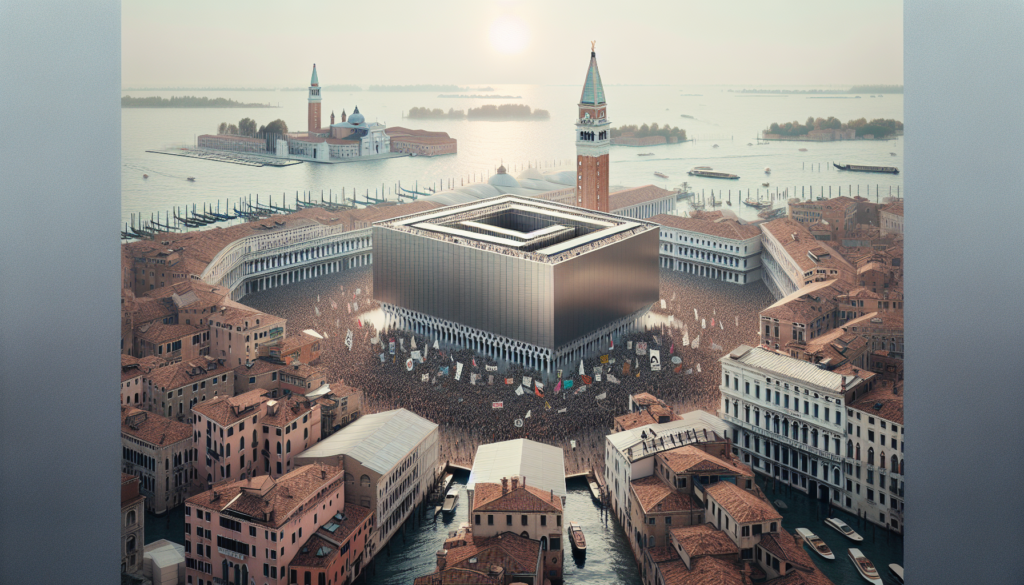
On the inaugural days of the Biennale previews, a large rally took place outside the Israeli pavilion, drawing international attention. Activists from the Art Not Genocide Alliance led the protests, waving Palestinian flags and condemning what they termed as Israel’s policies, which they described as “genocide.” The protesters aimed to challenge the official representation and raise awareness about ongoing conflicts in the region.
Controversy Surrounding the Israeli Pavilion Artist
The situation was further complicated by allegations involving Belu-Simion Fainaru, the artist representing Israel at the pavilion. Fainaru reportedly issued legal threats against the Venice Biennale, citing concerns over alleged antisemitism and discrimination within the institution. These tensions contributed to an atmosphere of unrest and prompted reflections on the intersection of politics and art at this prestigious event.
Protests Against Russia’s Participation
Russian artists and activists also staged protests during the Biennale. Notably, members of Pussy Riot and FEMEN, the Ukrainian feminist movement, organized demonstrations against Russia’s involvement, particularly targeting the participation of artists linked to the Russian government. These protests highlighted ongoing geopolitical conflicts and the role of art as a form of resistance.
Resignations and Institutional Challenges
The controversy extended to the Biennale’s jury, which experienced a sudden wave of resignations. The jury members cited disagreements over the direction of the exhibition and concerns related to political protests and institutional transparency. This upheaval has sparked discussions about the independence of the art jury and the influence of political tensions on the event’s organization.
Broader Context and Artistic Response
Despite these protests, the Biennale continues to showcase a diverse array of contemporary art. Exhibitions across Venice and beyond explore themes of conflict, identity, and activism. Artists are using this platform to voice urgent social issues, transforming the event into a space of dialogue and contestation.
Additional Highlights of the 2024 Venice Biennale
- Upcoming exhibits: Shows in Upstate New York and other locations, featuring works by Irina Lotarevich, Koyoltzintli, Daniele Frazier, and more.
- Legacy and remembrance: Tributes to influential figures like Steven Durland, Georg Baselitz, Nicole Hollander, and Doris Fisher.
- Other cultural events: Presentations such as ‘Screen Melancholy: Li Yi-Fan’ by Taiwan and the ‘Passages’ MFA thesis exhibition at SMFA, Tufts.
Conclusion
The 2024 Venice Biennale exemplifies how contemporary art continues to serve as a powerful platform for political expression and social critique. The protests, controversies, and institutional challenges reflect the complex and often contentious relationship between art, politics, and society. As the event unfolds, it remains a vital space for dialogue, resistance, and reflection on global issues.